
My first house
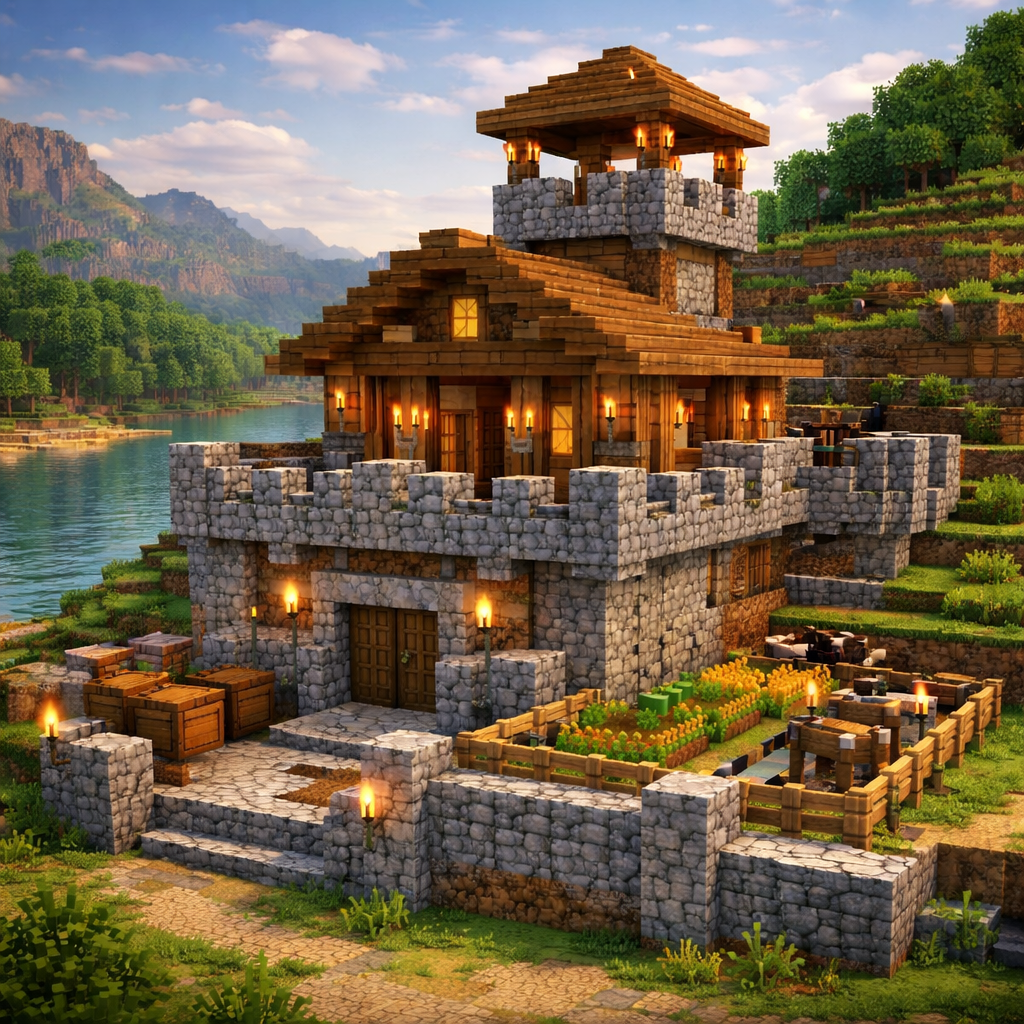
How to Build a Survival-Proof Minecraft House That Actually Lasts
In Minecraft survival mode, a house is not just decoration, it is also protection, storage, and efficiency combined. Too many players rush a quick box and then wonder why mobs, creepers or the fact of not having enough storage destroys everything. A good survival house is planned, layered, and expandable, think about the claim blocks too!
Start with the location. Build near essential resources: wood, stone, water, and food. Flat terrain helps early on, but cliffs or hillsides give an overall better aesthetic and natural protection.
Next is material choice. Wood is fast but weak. Stone, cobblestone, and deepslate offer much better blast resistance. A strong early-game combo is cobblestone walls with a wooden interior. This keeps it safe without making it ugly. Make sure it is expandable by adding multiple layers or adding nice details to the building.
Designing a High-End Survival House in Layers
A strong survival house is not built from the inside out or the outside in. It is built in layers, each with a clear role. This keeps the design aesthetic, readable, and adaptable, even for later in the game.
Exterior Shell – Form, Rhythm, and Presence
The exterior is not just protection. It is the identity of the house.
Think in terms of:
- Massing and proportions
- Material hierarchy
- Repetition and rhythm
Use thick walls, recessed windows, and layered facades. Avoid flat surfaces. Depth creates shadow, and shadow creates quality.
Overhangs, balconies, and framed openings are not decorative extras, they are part of the architectural language. Rooflines should be readable from a distance and slightly exaggerated to give the house weight in the landscape.
Mob proofing the roof happens naturally when the exterior is well designed: slabs, stairs, trapdoors, and overhangs remove spawnable surfaces without looking technical.
Structural Interior Layer – Spatial Order
Inside the shell sits the structural layer. This defines the main volumes and circulation.
Think in zones, not rooms:
- Public spaces (crafting, smelting, storage access)
- Semi-private spaces (enchanting, brewing, trophy rooms)
- Private spaces (sleeping, personal storage)
Use double-height spaces, voids, and staircases as architectural elements. Verticality adds grandeur and improves navigation. A vertical house feels intentional, not cramped, when floor heights are consistent and sightlines are controlled.
Walls here are thicker than needed. That thickness allows for details, lighting recesses, and material transitions.
Functional Layer – Precision Without Visual Noise
This layer contains everything that makes the house work, but it should never dominate visually.
Storage systems are hidden behind walls or placed in dedicated wings. Redstone is integrated, not exposed unless it is part of the aesthetic.
Crafting, smelting, and enchanting areas are designed as spaces, not corners with blocks. Align blocks, repeat materials, and use symmetry where possible.
Everything has a place. Nothing feels temporary.
Roof Layer – Silhouette and Control
The roof is where aesthetics and function meet.
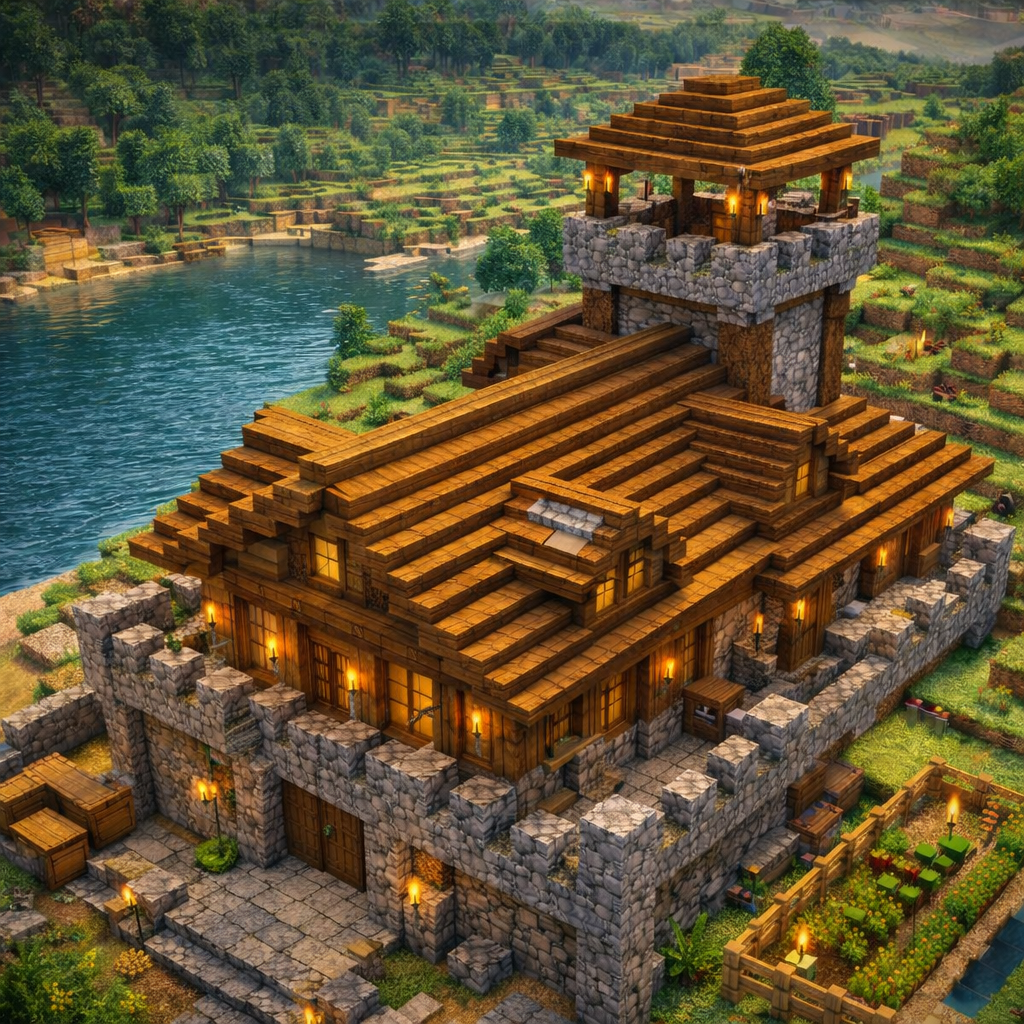
Large overhangs, stepped rooflines, and layered heights:
- Prevent mob spawning
- Protect facades from rain
- Add a strong silhouette
Roofs should feel heavy and intentional. Combine slabs, stairs, and full blocks to avoid flat planes. Dormers, skylights, or subtle breaks add scale and detail.
From above, the roof should still look designed. This matters more than most players think.
Lighting Layer – Atmosphere First, Function Second
Lighting is not just about preventing mobs. It defines mood.
Use multiple light sources with different intensities:
- Ambient lighting for general glow
- Accent lighting to highlight materials and details
- Functional lighting where precision matters
Spacing still matters. Roughly every 6–7 blocks keeps areas safe, but hide light sources in floors, ceilings, beams, and walls. Lanterns, glow lichen, sea lanterns, and redstone lamps all have different visual weights. Choose deliberately.
If you see the light source before you feel the light, it is probably placed wrong.
Growth Layer – Designed to Expand
A high-end survival house is never finished.
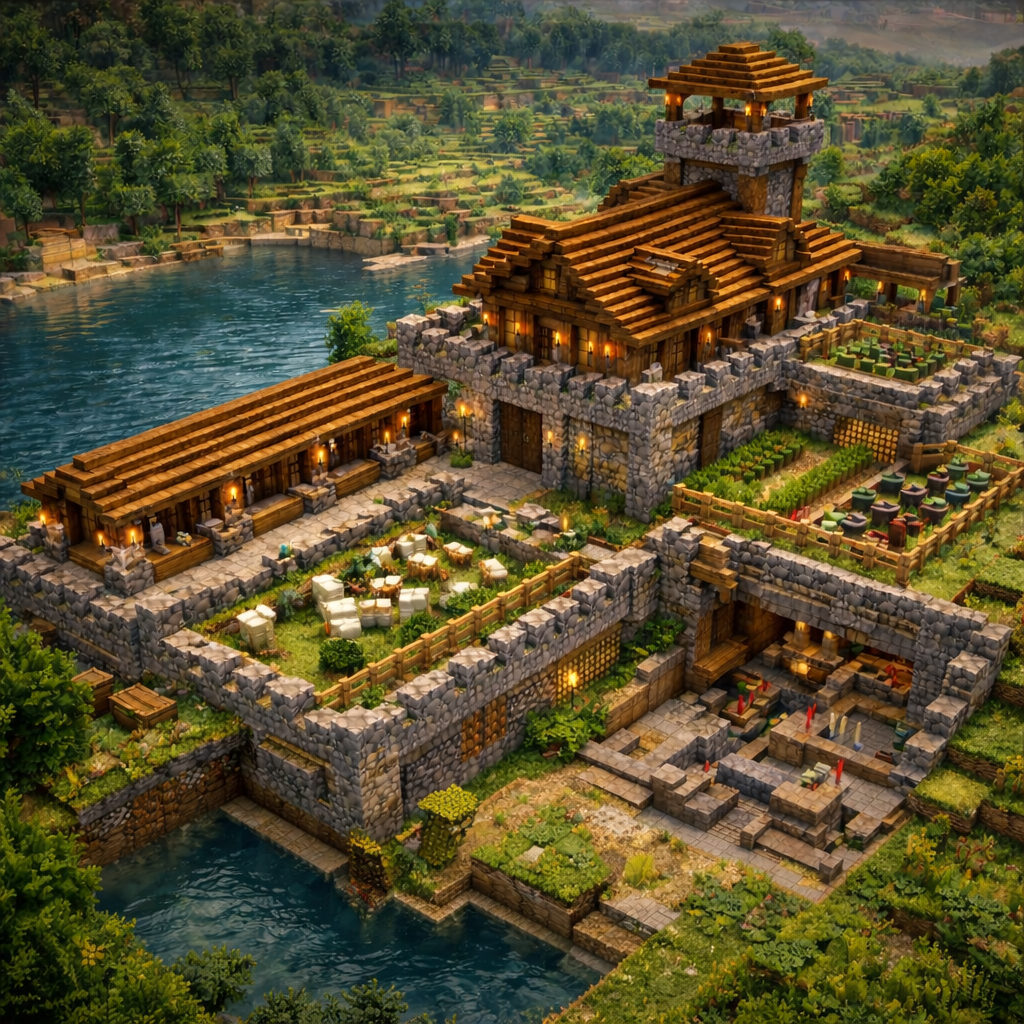
Plan clear expansion zones:
- Reserved wings for farms or villagers
- Vertical extensions for future systems
- Underground layers for redstone or automation
Expansion should feel like a natural continuation, not an afterthought. Repeat proportions, materials, and structural logic so additions blend seamlessly.
The goal is evolution, not replacement.